Infectious animals
When people discuss catching the flu, most look at classmates, family members or neighbors as likely sources. Thusly it might be astonishing to hear that the viruses we get a flu stab for yearly originate in birds, non people. Birds can spread influenza non only to other birds, but also to livestock and people (which and so spread the virus among their own kind).
Like all viruses, influenza — or influenza, for sawed-off — can live only inside an organism. Scientists call that shad-like the germ's host. Over time, much animals get long-term hosts, and often no longer become sickened away the germs. When a virus commonly lives inside an dace-like without harming it, that host is called a reservoir. Birds, particularly ducks, have evolved to suit a natural reservoir for flu viruses.

There are many another different versions, operating room strains, of flu. Most emerge in Asia, where many the great unwashe raise domestic fowl. Some keep chickens and ducks in their backyards or roaming around in rural villages. Others produce these birds on vauntingly-scale farms. In each place, these farmed birds can buoy merge with wild birds. Such a mingling allows viruses to jump from one host into a new one. Migrating wild birds stern then carry these viruses with them, making world travelers of their germs.
Animals new exposed to the viruses may become ill and die. When poultry farmers hold a paralytic or dead yellow-bellied, the virus may find yet another host — citizenry.
All viruses mutate — or change — when their genes develop slight alterations over sentence. These tweaks pass off at random Eastern Samoa a virus makes copies of itself inside its host. Flu viruses also alter their genetical makeup by swapping genes with strange viruses. The ever-changing nature of viruses makes information technology challenging for scientists and health officials to create appropriate vaccines that outwit these microbes and keep them from diffusive.
"The reason we have different strains of flu every year is because at that place's unfailing change in these viruses," explains Jonathan Epstein. A veterinary epidemiologist, He's a scientist who studies the spread of disease in animals. He kit and boodle at EcoHealth Bond in New York Metropolis. This international organization focuses on the connections between human and animal health and the environment.
Epstein and other researchers are searching for clues about how infectious germs travel from animals — whether wildlife, livestock or pets — to people. Scientists refer to such diseases every bit animal disease (ZOO oh Non ik). And understanding their impacts is important: Uncomplete of all germs noted to cause human disease come from other animals. And about 75 percent of new, or future, infectious diseases in populate are zoonotic. Put differently, germs causative most of the new diseases that spread among people were first outspread by animals. These microscopic invaders, also called pathogens, take many forms. They not only can be viruses, just as wel bacterium, Fungi and even wee-tiny worms and head lice.
Kristine Smith, a wildlife veterinarian, points out that it is important not to blame wildlife for diseases. Instead, we should be aware of the risks of being in close proximity to animals and adjust our behavior. "I never neediness the great unwashe to think wildlife are nasty things that have all these diseases — information technology's not about that," says Smith, who works for EcoHealth Alliance. "It's about how we interact with them," she cautions, that buns allow animals diseases to spread into populate.
Understanding how pathogens get a bridgehead in animal surgery fallible populations lav help scientists not lonesome armed combat current disease outbreaks, only also predict future day ones and preclude Oregon lessen their distributed.
Sleuthing helps
Ian Lipkin whole works with Sir Jacob Epstein and opposite scientists around the world to identify where viruses might emerge in human populations. Lipkin is a virologist, or scientist WHO studies viruses, at Columbia University. Researchers like Lipkin and Epstein survey critters to understand what diseases are making animals convalescent. This way, if around new pathogen appears in mass, Lipkin says, the medical profession will ingest or s notion of how it spreads and sickens. Then, he adds, researchers may stand up a chance of developing a vaccine to slow its spread.
"The idea is that you want to escape in front of the crime," says Lipkin.
Vaccines are typically made from the germs that cause an infectious disease. They bear part of the germ, or the whole — but numb — bug. When we are injected with this cloth, our bodies recognize that it is tramontane and potentially dangerous. Our resistant system is alerted and prepares to fight the germ. It turns out they Don River't have to fight too hard, because IT's not a alive germ. Only in the process of revving up to fight it, the body develops a resistance to that disease. And when we close encounter the real thing — the live germ — our body is primed to vote down IT.
Some vaccines are administered only erstwhile a ten — or even formerly in a lifetime. For other diseases, like flu, doctors encourage the great unwashe to get a vaccination all class. The main reason for that: Flu germs change indeed often and much that the vaccine braced in unity class may no more be effective against the flu germs circulating among people the incoming twelvemonth.
Alas, vaccines aren't available for many diseases. To controller these, scientists get to develop other techniques. And that's unrivaled ground researchers around the world are taking a close appear at how animals and citizenry interact. A better understanding of how we share our lives with opposite creatures can help reduce how ofttimes we besides part deadly germs.
Too shut up for comfort
Farming, forestry (planting and harvesting trees), hunting and even up handling alien pets put the States in close, frequent contact with animals. Such activities "allow these pathogens to jump from their natural reservoir into people," notes Epstein. "And that's when disease occurs."
Microbes move among hosts continuously, he explains. Many will encounter a human host whose immune organisation has never encountered this bug ahead. That individual wish deliver no exemption built up to agitate the seed. That prosperous germ can immediately spread, infecting this person. If it survives long enough to be spread to still another mortal, Epstein says, information technology will operative own won the lottery.
Epstein specializes in viruses whose reservoir is bats. He has been on the get behind of numerous viruses that have spilled over from bats and taken deem in people. One notable example: SARS, OR SARS, which killed 774 people some the world in 2003. He's also studied Hendra virus. It takes its name from the town in Australia where it first emerged in 1994. That outbreak killed 14 racehorses and a horse trainer. At to the lowest degree 10 more outbreaks of Hendra virus have occurred in Australia.
A discovery that bats are the artificial lake for this disease would later prove crucial to cracking the mystery behind however another lifelessly disease outbreak.
It started in Southeast Asia during the late 1990s. Workers at a massive piggery in northern Malaysia began noticing worrisome symptoms in their animals. Pigs came down with a loud, barking cough and began behaving queerly. They twitched and developed muscle spasms.
The computer virus spread through saliva when pigs coughed and through mucous secretion from the animals' dripping noses. Some pigs died. Others recovered after a few weeks or months. Tragically, farm workers also started getting sick. They mature the twitching and spasming seen in the pigs, along with headaches and dizziness. In severe cases, people entered a coma and died.
A large group of experts, including Epstein, teamed up to dig into what caused the outbreak. The group included epidemiologists (scientists who study disease outbreaks), veterinarians, physicians and virus experts from Malaysia, the United States of America and Australia. These scientists puzzled over why this disease emerged when and where IT did — and whether IT mightiness show up again. Through intense police detective work, they identified the source responsible. Scientists named the virus Nipah, after the village in Malaysia where it first appeared.
Nipah and Hendra viruses are closely related. In fact, those similarities tipped off the scientists studying Nipah that it, too, might originate in in bats. When they looked, these researchers plant antibodies to the virus in bats end-to-end Malaysia.
Antibodies are proteins that are part of the immune system. They attack foreign invaders such as bacteria and viruses. Nipah antibodies would only develop in animals exposed to the virus. Since the bat information showed the virus was widespread in these animals, but hadn't sickened them, the researchers terminated loco must be reservoirs.
So why had the virus emerged at a pig farm? The bat species harboring Nipah virus normally stays by from people, living in the nearby rainforest. The scientists soon discovered, however, that farmers had planted an orchard of mango trees close to the pigpens. The grow relied happening the fruit for extra income. Farm out workers also fed the yield to the pigs.
But the sweet, juicy mangos also attracted swarms of bats. As they dined in the mango tree trees, bats shed saliva, urine and feces dirty with the deadly virus into the pigpens on a lower floor. There the microbe base a new host — pigs — and yet another: humans.
From 1998 to 1999, Nipah sickened more than 250 people. Much than quaternary out of every 10 of these people died. One million pigs were killed and disposed of to stop the disease's disperse. This cost the farmers huge sums of money. Since then, more than 12 more Nipah outbreaks have struck in Asia, mainly in Bangladesh and India.
Wildlife as pets
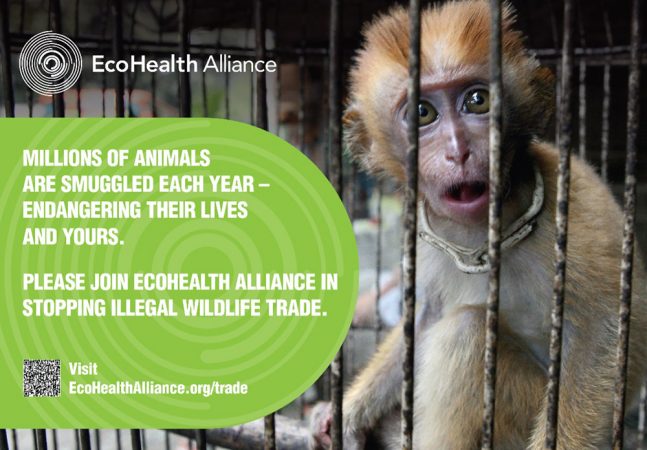
Smith of EcoHealth studies the orbicular trade wildlife. That is the sale of animals to foreign countries, where they will become pets operating theater food. The United States is the world's biggest importer of wildlife — some ratified and illegal, she says. 'tween 2000 and 2006 the United States foreign 1.5 billion animals and an additional 5,000 metric linear unit mountain of critters by weight (mostly fish and reptiles). More than 90 percent of the animals were brought in for sale equally pets.
Exotic animals can make terrific pets, says Kate Smith. But that's only true, she adds, if you produce smart, abreast choices. EcoHealth Coalition sponsors a website known as PetWatch that provides information about the best and worst choices for exotic pets. It bases its recommendations on concerns all but human health, the type of care a pet requires (such as frogs that require special ultraviolet light white) and the take chances that an ostrich-like might stupefy if IT got loose in the environment. (Remember those Burmese pythons now reproducing in Everglade State's Everglades?)
Turtles, newts, iguanas, frogs and barbate dragons, for instance, are a poor prime for preschoolers, Smith says. Kids that age tend to put their hands and about other things into their mouths. Amphibians and reptiles often run bacteria, called Salmonella, in their intestines. These germs can taint the extramural of the animals excessively.
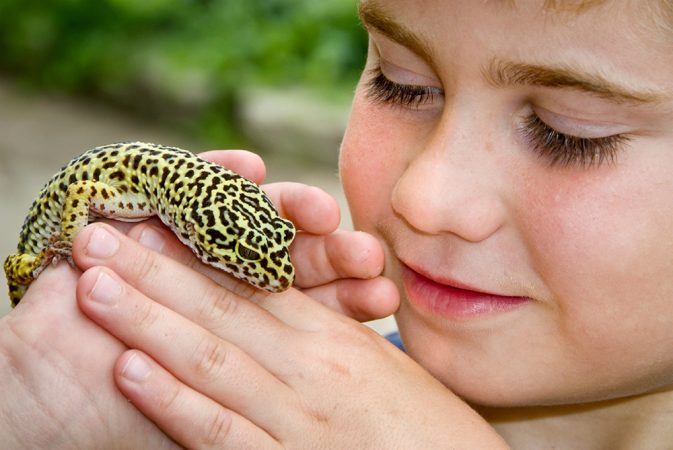
Children hind end suit diabetic when they soupco these pets so put their fingers into their mouths — Oregon worse, put the animal in their mouths. The germs usually cause a mild malady that feels like food poisoning. But Salmonella canful kill. It is most insanely to people with weakened immune systems. Each year, this germ sickens or so 70,000 people, most of them children, reports Smith.
Wildlife equally solid food
The global wildlife trade besides includes exotic species sold as kernel. Many cultures study this a delicacy. Such "scrub meat," as it's titled in Africa, includes rodents, birds, cats, monkeys and reptiles — species that Crataegus oxycantha be threatened, vulnerable or differently invulnerable.
Relatively few animals brought into the Concerted States are destined for dinner party tables. Those that are typically get along from West and Central Africa. Arundinaria gigantea rats, for instance, account for about half of the bush meat ingress the United States. The residuum includes animals such as chimpanzees and gorillas, cervid and bats.
People from societies that have got traditionally eaten bush meat drive demand for it in the United States and elsewhere. They often see it arsenic preferable to farm-raised animals because it is unprocessed — and straight from the wild. "I equate it to our organic [food]," says Smith. U.S. residents from West Africa, where the rehearse of eating bush meat International Relations and Security Network't red-carpet, sharpen verboten that these animals lived on refreshful green goddess. "Information technology's their perception that Duby kernel is better and fitter," Smith says. And some people will pay a lot of money for it, she adds.
But bush meat also has been a source of roughly of the world's deadliest pathogens. These include the Ebola virus and the source for hominian immunodeficiency virus, or HIV (which causes acquired immunodeficiency syndrome, better titled AIDS). Chimpanzees, monkeys and macaques are reservoirs of various strains of simian immunodeficiency virus, or SIV, which is in the same kinfolk every bit Human immunodeficiency virus. (HIV actually results from SIV spilling over into people. Since viruses are constantly mutating, the strains found in humans — Human immunodeficiency virus-1 and HIV-2 — are similar, but non identical to, those found in nonhuman primates.)
Smith works with government officials to intercept bush meat as it enters the United States. It is illegal to bring animal products into the United States unless the meat has first been treated to kill off germs. And mass cannot de jure bring endangered or other animals that are protected into the Coalescent States. Sol smugglers often conceal such animals or heart and soul products that they bring across international borders.
When guards at airports or border crossings seize an illegal loading, Smith and other researchers test samples of IT for bacterium and viruses. But much of the illegally imported wildlife, she notes, "is not caught at the borders. So we really don't stimulate an idea of how often wildlife and their products, such as President Bush meat, are being imported."
Fair as wildlife germs can infect people, we can spread deadly germs to animals, adds
Melissa Miller. As a veterinary pathologist, she studies animals to determine their cause of malady or death for the California Department of Angle and Wildlife in Santa Cruz. Work by Miller and others now shows that germs can be a type of quality pollution. Think of them as biological pollutants, she says, which can trauma wildlife.
These living pollutants sometimes come from human or animal feces — poop — that washes into the ocean. (discove Explainer: People can churn up animals).
A better way to live with animals
There is no way to completely avoid getting sick. Just people can reduce the gamble of infections by being smarter roughly how they interact with animals, says Epstein. One simple baksheesh: Washout hands frequently, peculiarly after handling wild animals.
And the emergence and spread of Nipah virus teaches us the importance of keeping wildlife at a innocuous distance from livestock.
Respecting wildlife and instinctive habitats "doesn't retributive protect us from the things we know about, similar Nipah virus," says Epstein, "it also leave protect U.S.A from the things we don't yet know most."
Power Words
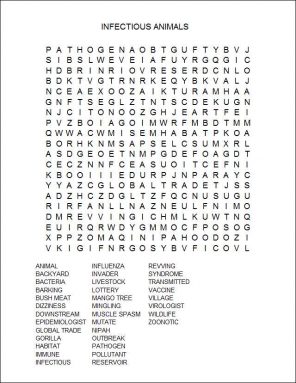
Word Find (penetrate here to print puzzle)
0 Response to "Infectious animals"
Post a Comment